
About Quine
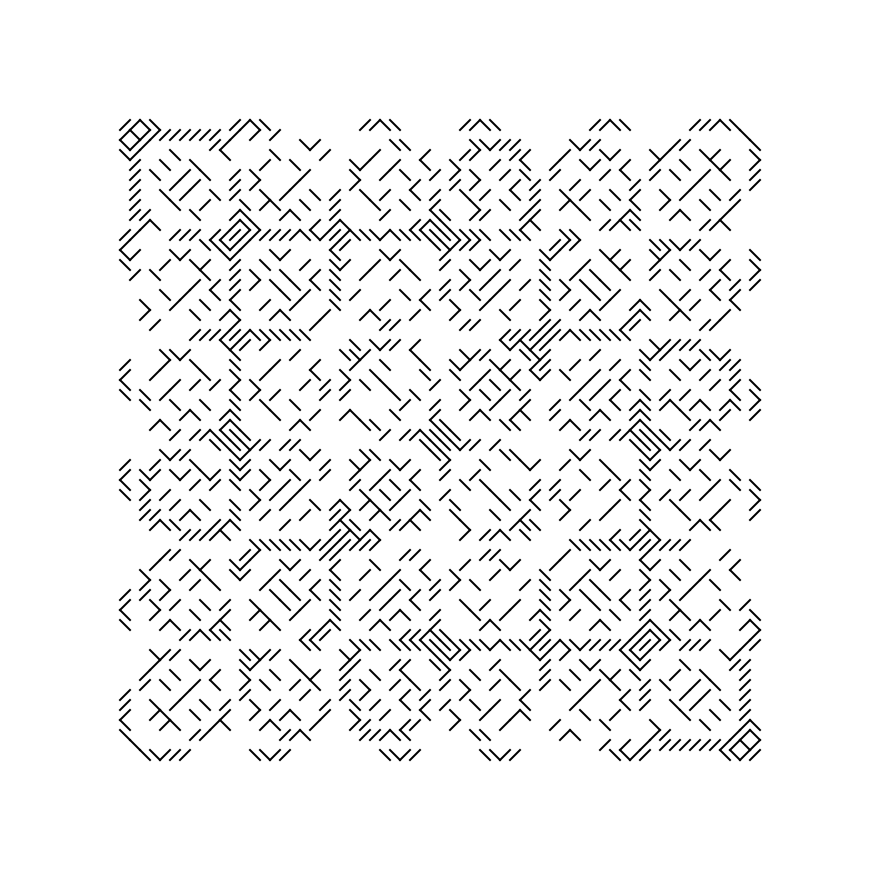
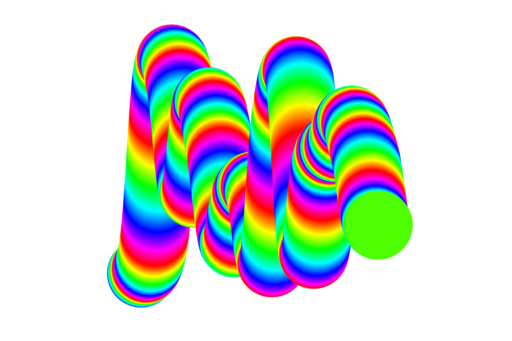
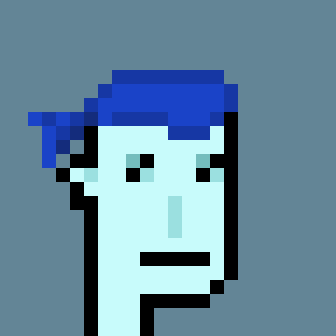
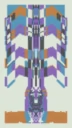
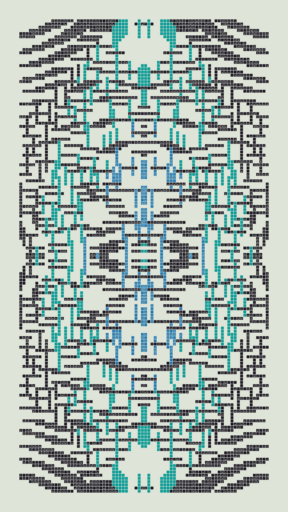
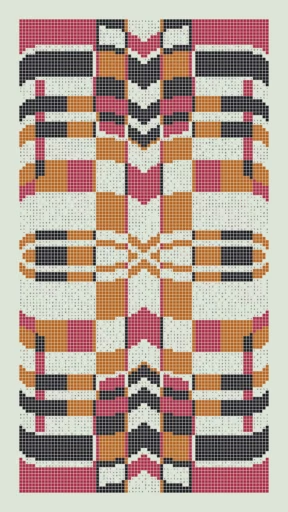
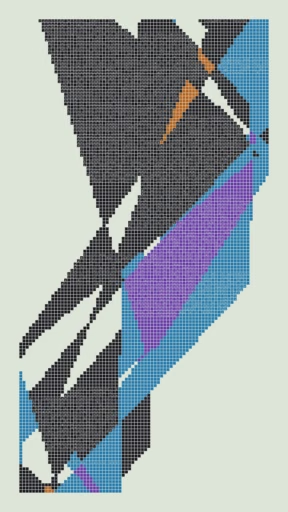
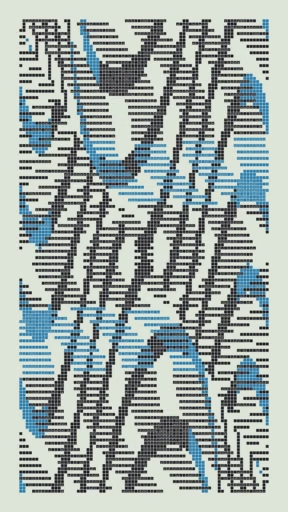
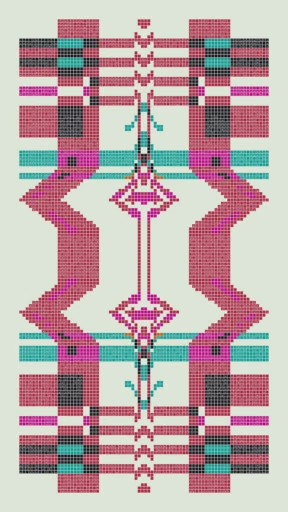
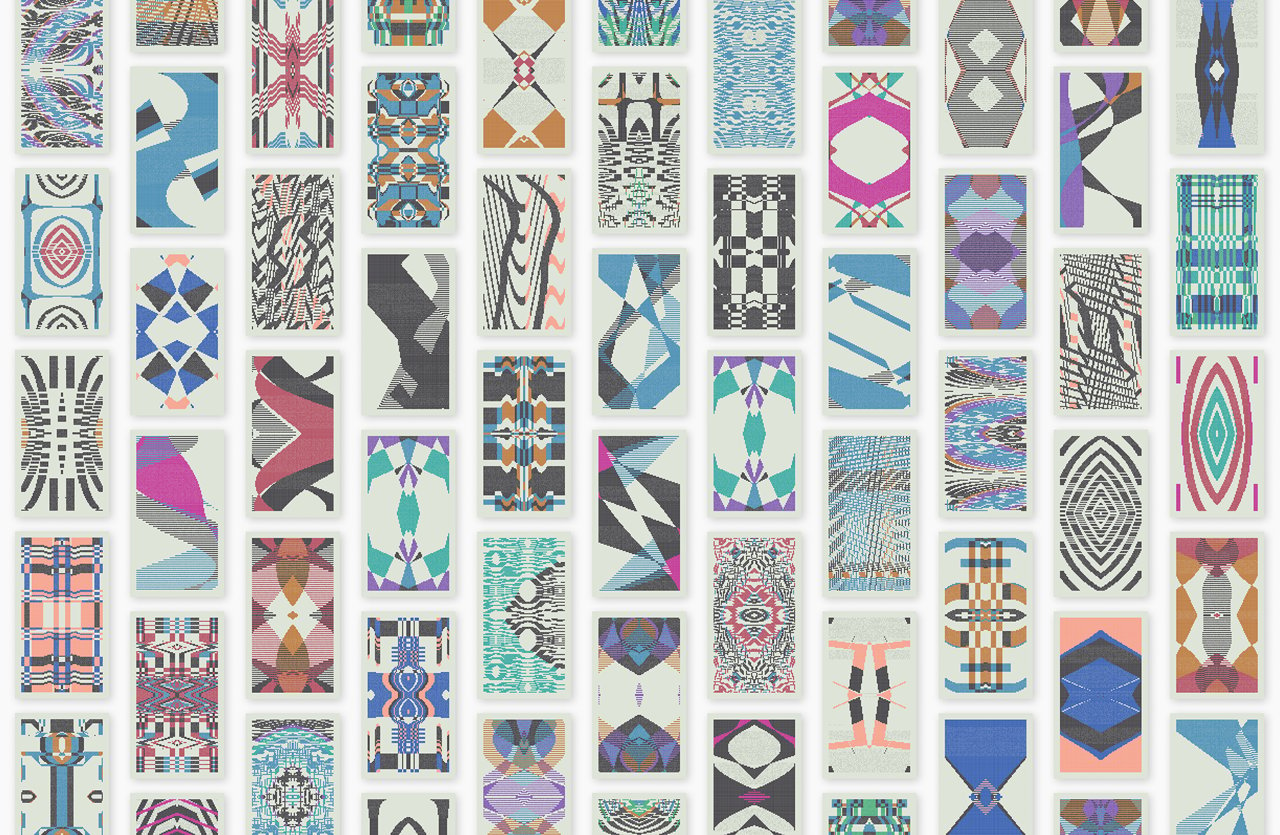
Quine is a set of 497 works by Larva Labs in which the image and its program are one thing. In computing, a quine is a program that prints its own source code. Each Quine is a grid of 78 by 148 cells, some colored and some blank, and a working program runs through the grid as text, usually in white on the color. Copy that text, run it, and it draws the next image. A few redraw themselves exactly. Most pass through two to eleven related images, which Larva Labs call generations, before returning to the first. Quine #342 has three. Seven, among them #12, never loop back.
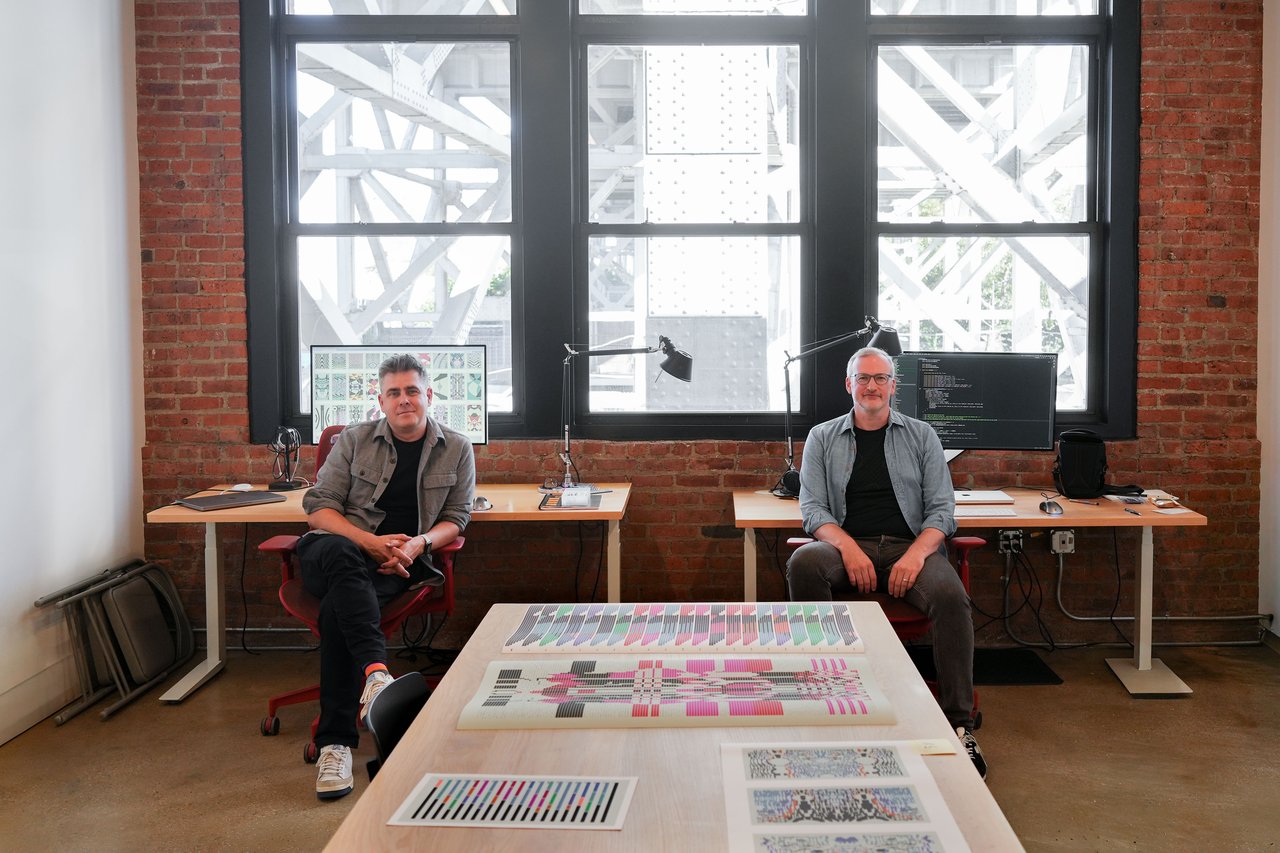
Matt Hall and John Watkinson made Quine to close Art Blocks Curated, the series that opened in 2020 with Chromie Squiggle. They wanted the code, usually unseen, to become the subject. Their generator, stored on Ethereum in the Art Blocks contract, draws nothing itself. For each token it assembles a small program around one of five engines, and that program makes the picture. A 24-hour auction on October 9 and 10, 2025 sold 477 Quines, every winner paying the lowest winning bid. Larva Labs held back the other 20. The owner of a Quine with several generations can choose onchain which one shows as its image.
Art Blocks' founder Erick Calderon credits Autoglyphs, the studio's 2019 onchain generator, with inspiring the platform, and he offered the pair the last Curated release. The word quine comes from Douglas Hofstadter's Gödel, Escher, Bach, which both read as teenagers. Every listing ends in a signature like Quine 74.1 by Larva Labs, number then generation. In December 2025 Art Blocks laid all 497 on one table at Zero 10, the new digital section of Art Basel Miami Beach.
What to look for
Quinity
How many generations a Quine passes through before its code returns to the start. Perfect-Quines redraw themselves exactly, and most take two to eleven steps. The seven Pseudo-Quines never loop and keep making new images. Both ends of the scale are the rarest.
Chrome
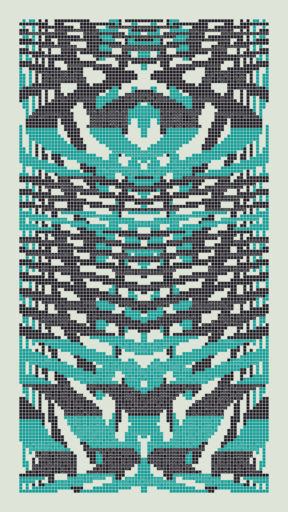
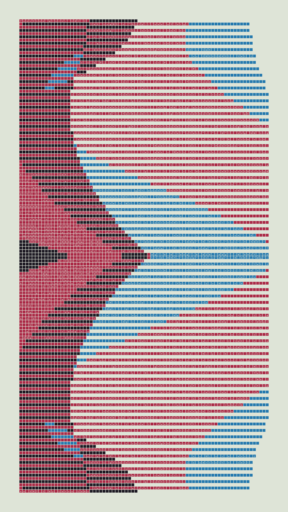
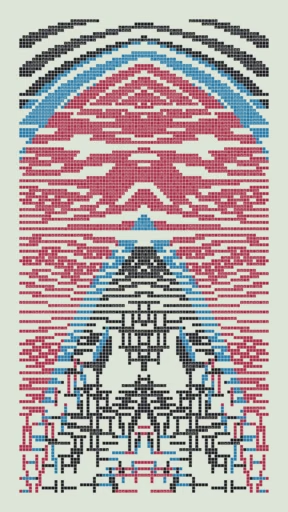
5 of 20 valuesThe palette, named with one letter for each of its colors: B blue, C cyan, K black, M magenta, O orange, P purple, R red, S sky blue, T teal and X fluorescent orange. There are twenty. X, named for fluorescent orange, is on only five Quines.
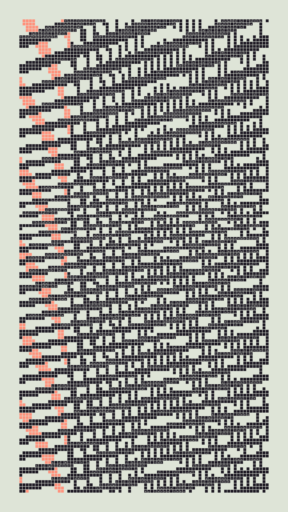
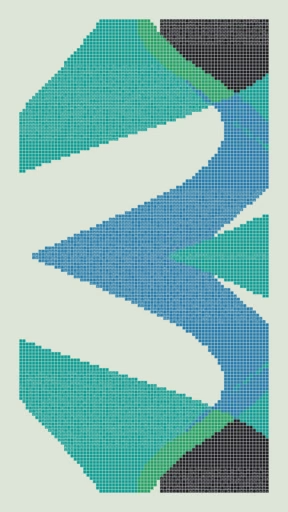
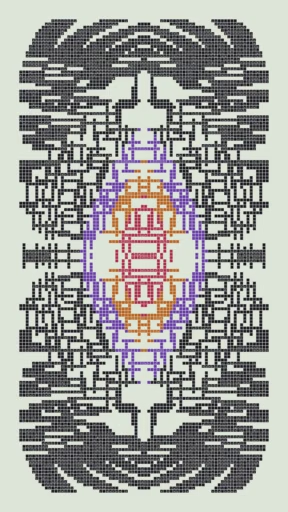
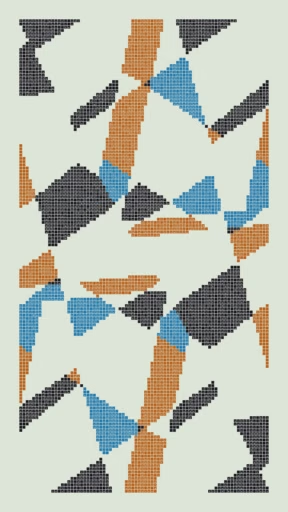
Code
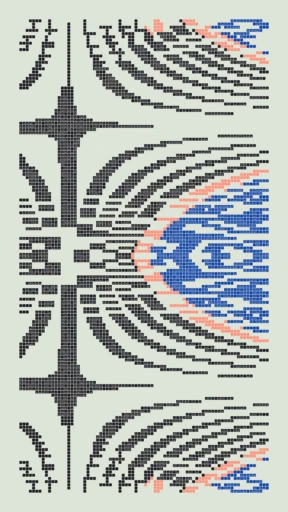
Where the code shows. In most Quines it runs in white text through the colored cells, which Larva Labs call Subliminal. In 88 it sits in black text in the blank cells instead, called Liminal. The Lattice engine produces Liminal code most often.
Engine
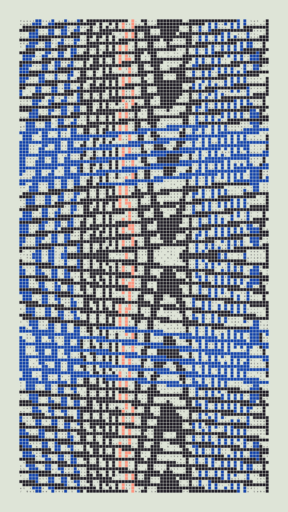
The algorithm that places the colored cells, which decides most of a Quine's look. There are five, each on roughly a fifth of the set, and Larva Labs say a practiced eye can tell them apart at a glance.
Space
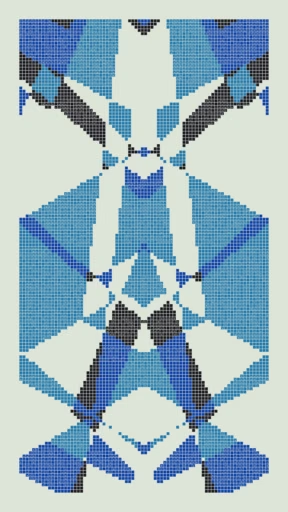
How the parts of a design connect: with straight lines in Euclidean space, with curves in Non-Euclidean space. Most Quines are curved. Every Glyph Quine is, while the Shape engine leans straight.
Top sales
Exhibitions
- 2025Zero 10 (all 497 Quines, and ten signed artist proofs)Art Basel Miami Beach, Art Blocks booth, Miami Beach, FL
Press & publications


Milestones
- 2025
- 2025
- 2025
- 2025
- 2025